
Serving Bowling Green Kentucky and the Surrounding Areas
Visiting Angels
BOWLING GREEN, KY
996 Wilkinson Trace Unit B-3 Bowling Green, KY 42103
Phone: 270-495-1222
Your loved one may feel more comfortable receiving help in the home they already know. Visiting Angels Bowling Green provides non-medical Alzheimer’s care. We support daily routines, personal care, companionship, and supervision. We serve Bowling Green and approved South Central Kentucky communities.
Memory loss affects the entire family. Spouses and adult children may spend much of the day preparing meals and answering repeated questions.
They may manage appointments, help with bathing, and check the home for safety concerns. They may also worry when their loved one is alone. As those responsibilities grow, even a devoted family caregiver can become physically and emotionally exhausted.
Visiting Angels starts by learning your loved one’s routines, preferences, home life, and current challenges. They also learn what help family members already give. We use that information to build a personalized care plan around the parts of the day where you need the most support.
You can review the plan when routines change. You can also review it when your family’s availability shifts. Review it if your loved one needs a different level of help.
When Memory Loss Begins Affecting Daily Life
Every family experiences Alzheimer’s disease differently. Some changes appear gradually, while others become more noticeable after an illness, hospitalization, move, or disruption in routine.
Your family may begin considering in-home Alzheimer’s care when a loved one:
- Forgets meals or needs reminders to eat and drink
- Has difficulty keeping track of daily routines
- Repeats questions or becomes confused about the time or day
- Needs help choosing appropriate clothing
- Resists bathing, grooming, or other personal care
- Becomes anxious when left alone
- Has difficulty completing familiar household tasks
- Needs accompaniment to appointments or errands
- Becomes restless or more confused later in the day
- Requires more supervision than family members can consistently provide
Visiting Angels does not diagnose Alzheimer’s disease or other forms of dementia. Families who notice new or worse changes in memory, behavior, or health should talk with a medical professional. When everyday tasks at home become hard to do safely, contact us. We can discuss non-medical support after a diagnosis.
How In-Home Alzheimer’s Care Can Help
Familiar surroundings can be comforting for someone living with Alzheimer’s disease. Remaining at home keeps your loved one close to the rooms, belongings, pets, neighbors, and daily habits they already know.
Depending on your loved one’s needs, a Visiting Angels caregiver may help with:
- Companionship and calm conversation
- Keeping familiar daily routines in place
- Planning and preparing meals
- Reminders to eat and drink
- Medication reminders
- Help with bathing, grooming, dressing, and toileting
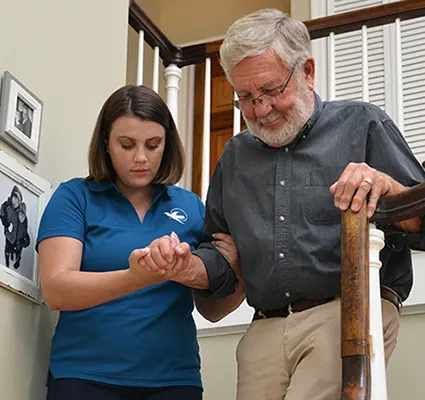
- Walking, mobility, and transfers
- Light housekeeping and laundry
- Grocery shopping and other errands
- Accompaniment to appointments
- Activities based on the senior’s interests
- Gentle redirection during confusion or frustration
- Noticing and reporting changes observed during visits
- Respite for spouses and other family caregivers
The care is non-medical. It depends on your loved one’s needs, location, requested schedule, and caregiver availability. A caregiver may help with meals, personal routines, walking, reminders, errands, light housekeeping, companionship, and supervision.
Visiting Angels caregivers do not provide nursing care, diagnose health conditions, give medications, or perform medical procedures. Direct questions about treatment, symptoms, or medical instructions to your loved one’s healthcare provider.
Support for Familiar Routines
A familiar routine can make the day easier to follow for someone living with Alzheimer’s disease. Rather than starting a new schedule, caregivers can use the habits and activities your loved one already knows.
Routine-based support may include:
- Following familiar morning steps for grooming and dressing
- Preparing meals around the times your loved one is used to eating
- Giving simple reminders about what is coming next
- Offering one or two choices instead of too many at once
- Playing favorite music or looking through family photographs
- Taking a supervised walk or joining in a familiar household activity
- Helping the home settle into a quieter evening routine
The care plan can change as your loved one’s routines, preferences, and support needs evolve.
Help With Confusion, Restlessness, and Wandering
It can be frightening when a loved one becomes confused, tries to leave the house, or starts doing things that may no longer be safe. The worry is even greater when the senior lives alone. It also grows when an older spouse provides most care. It increases when family cannot be there every day.
A caregiver can stay with your loved one, keep them company, and help them stick to a familiar routine. While it will not prevent every problem, they will not be alone when they are confused or restless.
Tell the local team about wandering, leaving the house, recent falls, nighttime restlessness, and other safety concerns. The more they know about what is happening at home, the better they can judge the needed supervision. They can also decide if the requested schedule is a good fit.
What happens if there is an emergency during a caregiver’s visit?
Families should share emergency contacts, important health information, known safety concerns, and any preferred instructions during the care assessment.
If something urgent happens, the caregiver can follow the steps provided. The caregiver can call emergency services if needed. The caregiver can also contact the chosen family member and the local Visiting Angels office.
Visiting Angels caregivers provide non-medical support and do not diagnose or treat sudden medical or behavioral changes.
Respectful Personal Care for Seniors With Alzheimer’s
Bathing, dressing, grooming, and toileting can be emotionally challenging for someone with memory loss. Your loved one may feel embarrassed, rushed, frightened, or unsure why they need help.
Personal routines may take longer when someone is living with Alzheimer’s disease. Caregivers move at your loved one’s pace. They explain what is happening. They use familiar prompts or simple choices to make the process less stressful.
Learn more about our personal care services in Bowling Green. Contact Visiting Angels to discuss the support your loved one may need.
Companionship and Meaningful Activities
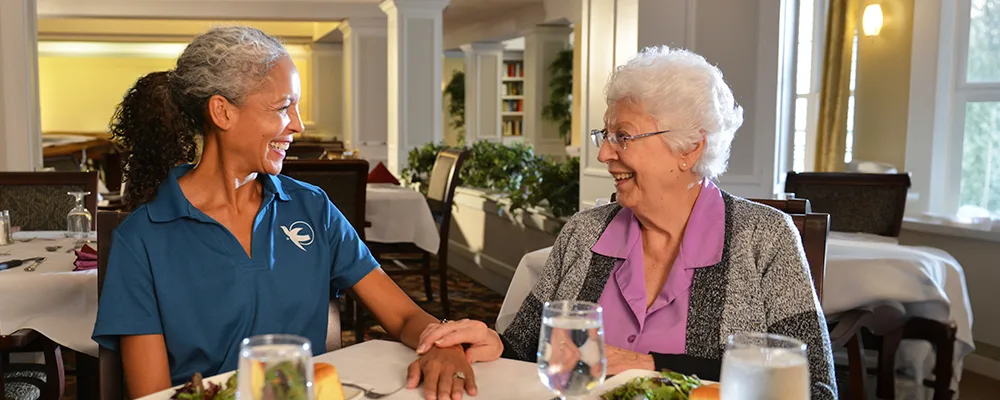
People living with Alzheimer’s disease may still enjoy conversation, familiar interests, movement, and personal connection. Simple activities can remain meaningful and provide structure to the day.
Depending on your loved one’s abilities and interests, companionship may include:
- Listening to favorite music
- Looking through photographs or keepsakes
- Completing simple household tasks together
- Taking a supervised walk
- Reading aloud
- Watching a familiar program
- Working on an appropriate puzzle or craft
- Sharing conversation without correcting every mistaken detail
Our companion care services offer regular social interaction and attentive one-on-one support at home. Contact us to learn how companion care may help your loved one.
Evening, Overnight, and Extended Alzheimer’s Care
Memory-related symptoms do not always follow a daytime schedule. Some seniors become more restless, anxious, or confused in the evening. Others wake repeatedly, attempt to walk through the home, or need help using the bathroom.
Depending on the care plan and caregiver availability, families may request:
- Evening assistance
- Help with the bedtime routine
- Overnight supervision
- Early-morning personal care
- Daily visits
- More consistent or 24-hour care
Learn more about 24-hour home care options or contact us to discuss scheduling. Availability depends on location, requested hours, care needs, and caregiver availability.
Respite for Spouses and Family Caregivers
Caring for someone with Alzheimer’s can slowly take over the whole day. A spouse may lose sleep, while an adult child spends evenings driving back and forth, fixing meals, managing appointments, and checking in at home. Other relatives may want to help but live too far away to be there regularly.
Respite care allows a Visiting Angels caregiver to assist your loved one while you:
- Go to work
- Attend appointments
- Run errands
- Spend time with other family members
- Exercise or attend church
- Rest without leaving your loved one unsupported
- Take a planned trip or temporary break
Accepting help does not mean abandoning your responsibility. It allows you to continue supporting your loved one without having to provide every hour of care alone.
Visit our respite care page. You can also contact Visiting Angels to learn more. Temporary or recurring caregiver relief may help your family.
Alzheimer’s Care Through Different Stages
As Alzheimer’s disease progresses, home care needs may also change. If daily activities become more challenging, contact Visiting Angels to review the care plan and schedule.
Support During the Early Stage
In the early stage of Alzheimer’s, your loved one may still do many things alone. They may need help staying on schedule or remembering what comes next. A caregiver can help with meals, reminders, rides, errands, and simply being there during the day.
Care may include:
- Reminders about appointments and everyday responsibilities
- Preparing simple meals and snacks
- Transportation to appointments and help with errands
- Light housekeeping
- Conversation and activities based on your loved one’s interests
- Help following familiar daily routines
Support During the Middle Stage
As memory and judgment change, your loved one may require more direct supervision and assistance with personal routines.
Care may include:
- Step-by-step reminders
- Bathing, dressing, and grooming assistance
- Meal and hydration reminders
- Mobility assistance
- Calm redirection during confusion or frustration
- More consistent supervision
- Respite for the primary family caregiver
Support During the Later Stage
Later-stage needs may include extensive assistance with personal care, eating, mobility, positioning, and daily supervision. Families should work with medical professionals to determine the appropriate combination of medical and non-medical support.
Visiting Angels may assist with approved non-medical activities such as:
- Bathing and grooming
- Dressing and toileting
- Meal assistance
- Mobility and transfer assistance
- Comforting companionship
- Respite and practical support for family members
Alzheimer’s Care Across Bowling Green and South Central Kentucky
Visiting Angels serves families in Bowling Green and approved communities throughout South Central Kentucky. Our service area includes Franklin, Glasgow, Scottsville, Smiths Grove, Auburn, Elkton, Morgantown, Russellville, Hopkinsville, and other nearby communities.
Care availability depends on where your loved one lives and the help they need. It also depends on the schedule you request and caregiver availability. You can review our Areas We Serve overview or call the local office to check a specific address.
How to Begin Alzheimer’s Care at Home
Choosing care for a loved one with Alzheimer’s disease can feel overwhelming. Our local team will help your family understand the care process and available non-medical support.
1. Schedule a Free In-Home Care Assessment
Contact Visiting Angels Bowling Green. Discuss your loved one’s daily routine. Discuss their current challenges. Share their location.
Explain what family support is available. Tell us your preferred schedule. Our local team can answer questions and explain which non-medical services may fit your situation.
2. Develop a Personalized Care Plan
We use the assessment information to shape a care plan around your loved one’s needs, preferences, home environment, family involvement, and desired schedule.
3. Select a Caregiver
Our team considers your loved one’s care needs, personality, routines, preferred schedule, and home environment. We use this information to select a caregiver. Because consistency matters for someone with memory loss, the local office may consider caregiver fit.
The office may also consider the caregiver’s experience with the requested support.
Families can ask the Bowling Green office about caregiver screening, orientation, training, and experience.
They can ask during the in-home care assessment.
4. Review Care as Needs Change
Your family can contact the local office when routines, scheduling needs, or the level of support changes. We can review the care plan to see if we need different visit times.
It can also check if more non-medical help or a steadier schedule is better.
If your loved one needs skilled nursing, therapy, medical treatment, or other care, speak with a healthcare professional. Visiting Angels can continue to discuss non-medical support that may complement those services.
Call Visiting Angels Bowling Green at 270-495-1222 or use our online contact form to schedule a free in-home care assessment. During the consultation, your family can ask about scheduling, caregiver experience, estimated costs, and payment methods.
You can also ask how the care plan may change over time.
Frequently Asked Questions About Alzheimer’s Care
These answers address common questions families have when considering non-medical Alzheimer’s care at home.
Does Visiting Angels provide Alzheimer’s care in Bowling Green, KY?
Yes. Visiting Angels provides non-medical Alzheimer’s care in Bowling Green and approved communities throughout South Central Kentucky. Care may include help with familiar routines, companionship, personal care, meal preparation, medication reminders, supervision, transportation, light housekeeping, and respite for family caregivers.
Can Alzheimer’s care help my loved one remain at home?
In-home care can help some seniors continue living in familiar surroundings by providing assistance with daily routines, personal care, meals, mobility, companionship, and supervision. Whether remaining at home is appropriate depends on the person’s needs, home environment, family support, medical condition, and available level of care.
Can a caregiver stay with my loved one while I work or run errands?
Yes. Respite care can provide temporary supervision and help at home while a spouse or family caregiver works, attends appointments, runs errands, rests, or handles other responsibilities.
Available times will depend on the senior’s location, requested hours, care needs, and caregiver availability.
Can caregivers help when my loved one becomes confused or agitated?
Caregivers can respond with a calm voice, familiar routines, simple choices, companionship, and gentle redirection when your loved one becomes confused or frustrated.
Visiting Angels provides non-medical care and does not offer medical treatment or behavioral health services. Sudden, severe, or concerning changes should be reported to the appropriate healthcare professional.
Does Visiting Angels provide overnight Alzheimer’s care?
Overnight and extended-hour care may be available. A caregiver may assist with bedtime routines, bathroom trips, mobility, companionship, and nighttime supervision. Contact the Bowling Green office to discuss current scheduling options.
Can a caregiver prevent wandering?
No caregiver can guarantee that wandering will not occur. A caregiver can stay close, offer companionship, redirect your loved one when needed, and help maintain familiar routines so they spend less time alone.
Families should share any history of wandering, exit-seeking, or other unsafe behavior during the care assessment. This helps the local team understand the requested supervision and determine whether the proposed care arrangement is appropriate.
Is Alzheimer’s care the same as medical home health care?
No. Visiting Angels provides non-medical home care. Caregivers can help with personal routines, companionship, meals, reminders, transportation, light housekeeping, and supervision.
Skilled nursing, medical diagnoses, medication administration, therapy, and other clinical services must be provided by appropriately licensed healthcare professionals.
How often can Alzheimer’s care be scheduled?
Care may be arranged for an occasional respite visit, regular weekly visits, daily help, evening care, overnight supervision, or a more consistent schedule.
Available times depend on the senior’s location, requested hours, care needs, and caregiver availability.
How much does in-home Alzheimer’s care cost?
The cost of care depends on the requested schedule, number of hours, level of assistance, location, and caregiver availability. Because each care plan is different, the Bowling Green office can provide more specific information after learning about your loved one’s needs.
Families may also ask which forms of payment are accepted and whether long-term care insurance, veterans programs, or another funding source may apply. Coverage and eligibility are determined by the insurer or program administrator.
How are family members kept informed?
With the senior’s permission and proper authorization, designated family members can communicate with the local office regarding schedules, daily routines, and any changes noted during caregiver visits.
During the care assessment, families can identify the primary contacts and discuss how and when updates should be shared.
How do we get started?
Call Visiting Angels Bowling Green at 270-495-1222 or use our online contact form. Our local team will discuss your family’s concerns and help schedule a free in-home care assessment.
Your loved one may feel more comfortable receiving help in the home they already know. Visiting Angels Bowling Green provides non-medical Alzheimer’s care. We support daily routines, personal care, companionship, and supervision. We serve Bowling Green and approved South Central Kentucky communities.
Serving Bowling Green Kentucky and the Surrounding Areas
Visiting Angels
BOWLING GREEN, KY
996 Wilkinson Trace Unit B-3 Bowling Green, KY 42103
Phone: 270-495-1222