
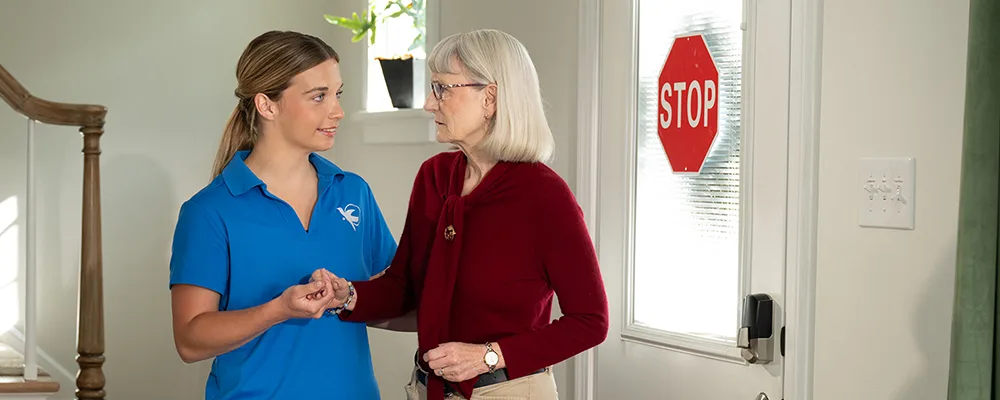
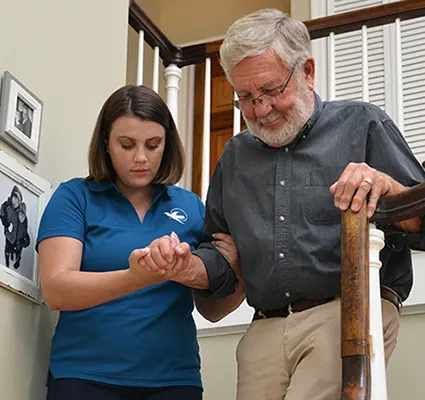
One of the top reasons transitional care in Palmer, MA is so important for our senior community: on average, 1 in 5 Medicare beneficiaries (20%) discharged from the hospital end up readmitted within a month.
If your loved one is currently in the hospital or has recently been released, call Visiting Angels of Palmer at (508) 344-9916 or fill in our contact form to learn more about post-hospital care in Palmer, MA.
Contact Us Online to schedule a FREE In-Home Consultation.
What Transitional Care Includes
Transitional care is short-term, non-medical support that helps a senior recover safely at home in the weeks right after a hospital or rehab stay, the window when the risk of a setback is highest. In practice, it usually includes:
- Medication reminders to keep the new post-discharge routine on track
- Help with daily living such as bathing, dressing, grooming, and toileting while strength returns
- Mobility and transfer assistance to lower the risk of a fall during recovery
- Meal preparation and hydration support, since poor nutrition is a common cause of readmission
- Transportation and reminders for follow-up appointments so nothing gets missed
- A watchful eye for early warning signs, catching small problems before they become an ER trip
- Coordination with your family and your loved one's care team, guided by our Ready, Set, Go Home checklist
Care is built around your loved one's specific discharge instructions, and it can be scaled up or down as recovery progresses.
How Post-Hospital Syndrome Could Affect Your Loved One
According to Harvard Health Publishing, post-hospital syndrome is defined as "a period of vulnerability lasting up to seven weeks after a patient is discharged from the hospital." During this time, people are at increased risk of being rehospitalized for conditions that are often unrelated to the reason they were hospitalized in the first place. An increased risk of death is also a possibility during this time.
While it isn't possible to eliminate every reason someone might need to return to the hospital, understanding the common causes can help you plan ahead and may reduce the likelihood of complications as your loved one transitions home and resumes a more normal routine.
Why Seniors Often End Up in the Hospital Again
Seniors who have recently been hospitalized are more vulnerable to infections, loss of muscle mass, and functional decline. They may need help with everything from getting dressed and preparing meals to bathing, toileting, and personal grooming. They may need help with mobility and transfers, medication reminders, and getting to follow-up appointments. Without additional help during this period, seniors can struggle to complete these and other tasks of daily living, which can lead to declining health.
Some of the common causes of readmission include:
- Medication mismanagement (missed doses, incorrect doses)
- Infections (UTIs, pneumonia, surgical site infections)
- Injuries from falls
- Poor wound healing
- Dehydration and malnutrition
- Unmanaged chronic conditions that require ongoing care
Fall Prevention Matters
Whether it's from lingering fatigue, weakness, foggy thinking, disorientation, or medication side effects, the risk of falling in or around the home is a major concern, and a fall can mean a return trip to the hospital. We recommend putting our Safe and Steady® fall prevention program in place before your loved one returns home.
Managing Chronic Conditions
For seniors with existing chronic conditions such as heart disease, diabetes, COPD, and arthritis, recovery can be even more challenging, and without proper support these conditions can worsen. Visiting Angels of Palmer offers palliative care to help seniors maintain their quality of life while recovering at home.
How Ready-Set-Go Home Transitional Care Can Help Your Loved One
Visiting Angels can help your family build a transitional home care plan before your loved one is discharged from the hospital or rehab facility. Through our "Ready, Set, Go Home" program, we provide a checklist guide so you have a comprehensive record of post-hospital care instructions, a clear picture of what assistance is needed and who is coordinating it, and a place for notes and reference information from your loved one's healthcare providers.
A Visiting Angels caregiver can meet your loved one before discharge and, with input from you and their healthcare team, we customize our in-home senior care so it fits their specific needs at home.
Once your senior is home, our caregivers keep a watchful eye during recovery to catch any issues early, so they can be addressed promptly and the risk of rehospitalization or an ER trip goes down.
Along with personal care for seniors, we also offer respite care so family caregivers get the breaks they need and don't burn out and end up in the hospital themselves.
Coordinating Care After a Baystate Wing Hospital Stay
Many of the families we work with are coming home from Baystate Wing Hospital, the community hospital right here in Palmer at 40 Wright Street. Part of the Baystate Health system, Baystate Wing has served Palmer, the Quaboag Hills, and the greater Pioneer Valley for more than a century, with a 24-hour emergency department and a range of inpatient and surgical services.
Discharge day tends to move fast, and it's easy for details to slip through the cracks in the handoff from hospital to home. That's where we fit in. We can meet your loved one before they leave Baystate Wing, review their discharge instructions alongside your family, and have care in place the day they get home, no waiting, no gap.
We also help with the follow-up care that keeps recovery on track. That includes rides and reminders for appointments at the Baystate Health & Wellness Center in Palmer, Convenient Care visits, and check-ins with primary care and specialists across the area. For seniors discharged from a larger regional hospital, such as Baystate Medical Center in Springfield, we coordinate the same way, bridging the distance between the hospital and home here in Palmer.
Frequently Asked Questions About Transitional Care
When should we start planning transitional care?
As early as possible, ideally while your loved one is still in the hospital or rehab. Planning before discharge means care is ready the moment they get home, which is exactly when the risk of a setback is highest. A quick phone call is enough to get started; we can build the plan around a discharge date that hasn't been finalized yet.
Can a caregiver meet my loved one before they're discharged?
Yes. As part of our Ready, Set, Go Home program, a caregiver can meet your loved one before they leave the hospital and review the discharge instructions with you and the care team. That way, everyone knows the plan before day one at home.
Do you coordinate with the hospital's discharge planner or care team?
We do. With your permission, we work from the discharge instructions and follow-up schedule so the support at home lines up with what the hospital ordered, from medication timing to appointment reminders.
How quickly can care begin after discharge?
Often the same day your loved one comes home. The sooner we talk, the more smoothly we can have a caregiver in place for the transition.
I'm the primary family caregiver. How does this help me?
Recovery care is demanding, and burnout is real, especially if you're also working or raising a family. Transitional care lets you step back into the role of son, daughter, or spouse instead of full-time nurse. Our respite care gives you scheduled breaks while your loved one stays supported.
What if we only need help for a few weeks during recovery?
That's a common request, and it's fine. Transitional care is meant to be short-term and flexible. Many families use it just for the recovery window, then stop or scale down. If more support turns out to be helpful later, we can adjust without starting over.
Will you keep our family updated on how recovery is going?
Yes. Our caregivers watch for early warning signs, changes in appetite, energy, mobility, or mood, and keep your family in the loop so small concerns get addressed before they become emergencies.
Request a Free, In-Home Consultation for Post-Hospital Care Today
If your loved one is currently in the hospital or has recently been released, call us at (508) 344-9916 or fill in our contact form to learn more about post-hospital care in Palmer, MA. We offer a free, in-home consultation and look forward to meeting you and your loved one to talk through how we can help them transition back to their routine and stay safely at home during recovery.
Serving Palmer and the Surrounding Areas
Visiting Angels
PALMER, MA
Maple Tree Industrial Center 21 Wilbraham St.Palmer, MA 01069
Phone: 508-344-9916